
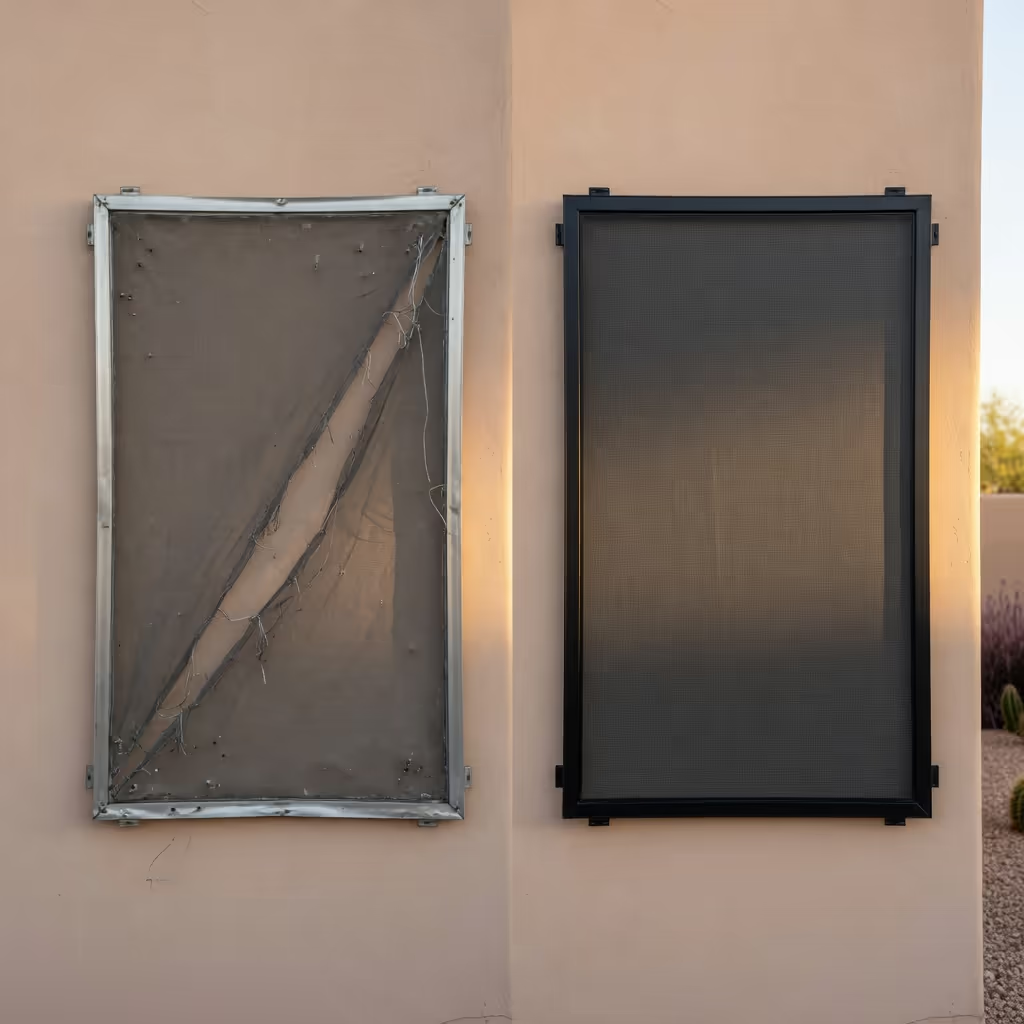
A hole in the mesh is easy to see. A frame that is slightly bowed, a loose corner or a door that no longer runs squarely can be less obvious. Looking at the full assembly helps avoid paying for a mesh repair that leaves the original problem in place.
This guide is a way to describe what you see, not a promise that every old frame or mechanism can be repaired. The material, condition, fit and availability of compatible parts determine the useful scope.
Know the parts you are looking at
- Mesh: the woven fabric that provides screening or the supplied sun-control function.
- Frame: the rails and corners around the fabric that fit the opening.
- Spline: the flexible retaining strip in a suitable frame channel.
- Retention and operating parts: clips, tabs, springs, rollers, hinges, latches or other parts, depending on the assembly.
Rescreening renews mesh in a suitable existing frame. Replacement supplies a new frame or assembly when the original is missing, damaged, unsuitable or no longer practical to service. Screen repair in Gilbert starts with that distinction.
Compare the condition before choosing the repair
Swipe to compare →
| Condition | Starting point | Check before deciding |
|---|---|---|
| One tear, sound mesh elsewhere | A repair or rescreen assessment. | Frame fit, retaining edges and fabric condition. |
| Brittle mesh or several tears | Complete rescreening may be more practical. | Whether the frame can be retained. |
| Bent frame or broken corners | Assess frame repair or replacement. | Correct dimensions and retention at the opening. |
| Missing screen | A new measured assembly. | Profile, hardware and normal window operation. |
| Dragging or unreliable door | A door-specific assessment. | Track, frame and compatible operating parts. |
An old panel can help explain the opening, but it may not be a reliable template if it is bent or never fitted correctly. Final dimensions need to match the actual opening and retention method.
When replacing just the fabric is not enough
New mesh cannot straighten a damaged rail, secure a broken corner or correct a frame that is too small. Repeated fabric pull-out can also involve a damaged retaining channel or poor installation, not only the age of the mesh.
Avoid forcing a frame into place or tightening fabric to disguise its shape. Where the original is missing or damaged, custom window screens provide a more useful starting point than trying to preserve an unsuitable frame.
Door problems need their own diagnosis
A sliding screen door can drag because of grit, rollers, alignment or frame condition. A hinged screen can catch because of hinge or latch issues. A retractable screen uses a different mechanism and may need product-specific servicing.
Describe when the problem occurs and what the door does. A screen that jumps its track or refuses to retract should not be forced. Mesh repair does not imply that glass-door parts or every old operating system are included in the same service.
Use the repair as a chance to reconsider the material
If you are rescreening, think about the original complaint. Was it only a tear, or did the screen also leave the room too bright, obscure a valued view or suffer repeated scratching?
Use the screen-material selection guide to compare those priorities. Solar, insect and more durable fabrics are not interchangeable, and the existing frame must suit the chosen material. Do not assume that a stronger mesh creates a security, golf-ball or child-safety assembly.
The CPSC’s window-safety advice explicitly warns against depending on screens to prevent children falling out of windows. Keep that safety function separate from an ordinary screen repair.
What affects the estimate?
The number and size of panels, fabric choice, frame condition, compatible parts and safe access matter more than a single universal price. A group of straightforward panels is a different scope from a damaged doorway or a hard-to-reach opening.
When completing the estimate form:
- Count window screens and doors separately.
- Explain which frames are missing, bent or apparently sound.
- Describe visible mesh damage and any operation problem.
- Mention unusual shapes or difficult access.
Exact measurements are not required to start the conversation. The form accepts written service details, not uploads; mention useful photos if you have them so follow-up sharing can be arranged.
After repair or replacement, use gentle screen-cleaning and care suited to the installed product rather than hard scrubbing, pressure washing or pulling on the fabric.