
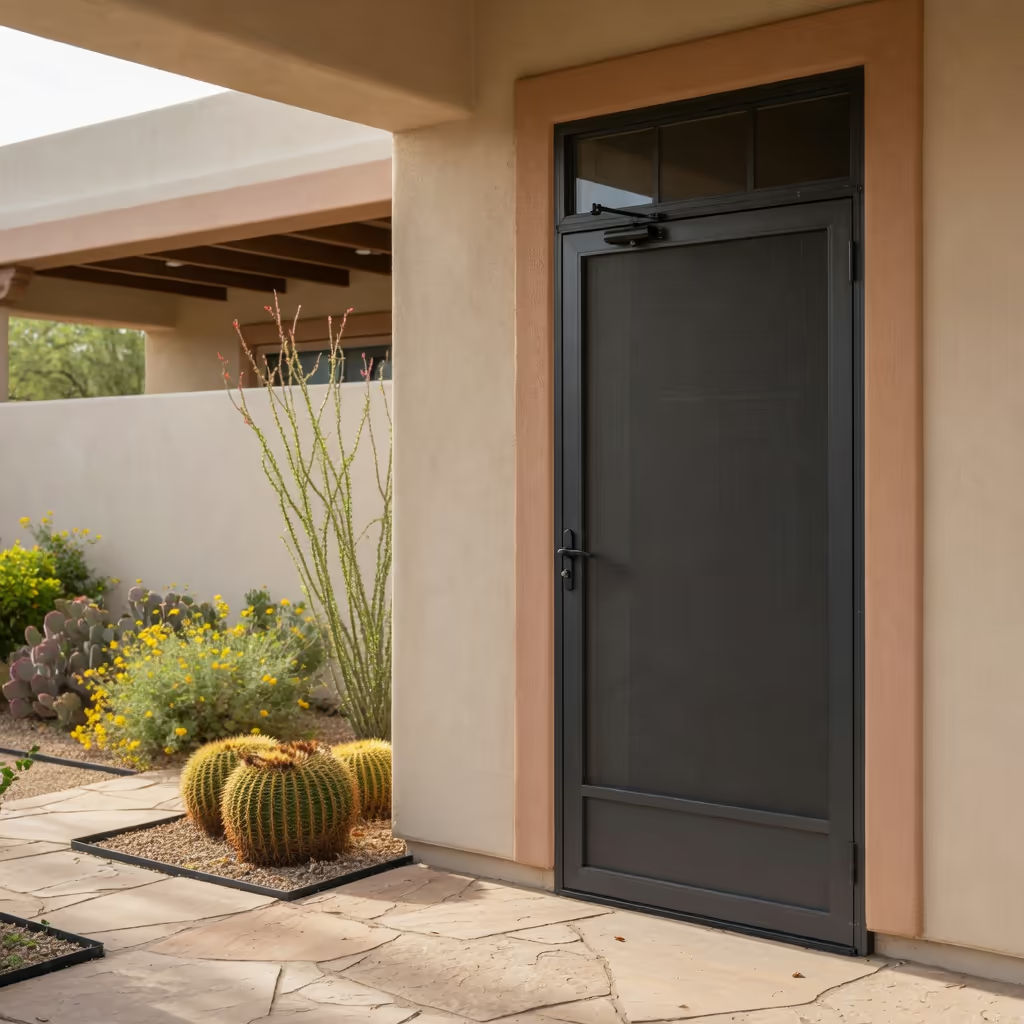
A screen door should make the entry easier to use, not introduce a new obstacle. The best starting point is the doorway you have: a patio slider, a single hinged door or a wider double opening.
Use this guide to compare the fit and daily operation. For product selection and a measured quote, start with the screen-door overview and the relevant subtype page.
Three styles, three fit questions
Swipe to compare →
| Style | How it works | What to check |
|---|---|---|
| Sliding | A screen panel runs along the patio-door track. | Track, rollers, frame sizing and latch alignment. |
| Swinging | A hinged screen opens through available swing space. | Handing, handles, jamb, threshold and closing hardware. |
| Retractable | Mesh extends across the opening and returns into a housing. | Housing, tracks, width, latch, passage and care instructions. |
The style name does not decide compatibility. The screen and main door must clear each other, and the closed screen should fit without an obvious gap. Mounting surfaces, trim and hardware can change what is practical.
Patio sliders: check the running gear
A sliding screen door usually needs to suit the existing patio opening. Dirty tracks, worn rollers, a bowed frame or incorrect adjustment can all make movement difficult.
New mesh will not repair a bent frame or damaged rollers. If a screen repeatedly derails, describe that symptom when requesting help. Replacing the screen does not automatically mean replacing the glass patio door, but the track and compatible fit still need assessment.
Hinged entries: leave room to swing
For a swinging screen door, consider the hinge side and space around the doorway. A projecting main-door handle, light fitting, nearby wall or trim can interfere with the screen.
Think about carrying shopping outside, frequent passage and the threshold. Closing hardware should suit the door and available mounting area. A latch that only works when the screen is shoved may indicate a fit or alignment problem rather than a mesh problem.
Retractable screens: consider the complete path
Retractable screens can suit an entry where you prefer the mesh hidden between uses. A housing, track and latching arrangement are still needed. Low-profile does not automatically mean threshold-free.
A double-door opening needs an appropriate meeting arrangement and product configuration. Larger openings should be discussed against the actual system’s supported dimensions, not assumed to work with any retractable product.
Ask these questions:
- Where will the housing and tracks sit?
- Will handles, trim and both main doors clear the screen?
- What threshold will people cross?
- How does the screen latch and release?
- What are the wind-use, cleaning and servicing instructions?
Retractable mechanisms need product-specific care. Keep accessible tracks clean as instructed and use only the specified cleaning or lubrication method. Do not force a stuck screen or open a spring-loaded housing without the appropriate knowledge.
Mesh, pets and daily traffic
Insect and solar fabrics have different priorities for airflow, light, view and shade. A durability-focused material also needs an appropriate frame and retention. Discuss scratching and traffic without assuming that heavier mesh solves every issue.
Ordinary screen doors, including retractable screens, should not be relied on as animal-containment or child-safety barriers. CPSC distinguishes window screens from fall-prevention measures. Product-specific household limitations should be checked before choosing a screen.
Screening is not the same as security
An ordinary screen door provides screening and airflow. A security screen door requires its actual frame, infill or mesh, hinges, locking and anchorage to be evaluated together.
Do not treat an ordinary latch as a security lock or assume a decorative design proves a tested performance level. Ask for the supplied product’s construction, applicable documentation and release arrangements. Where code or escape requirements apply, the chosen arrangement must be appropriate for the property.
Begin with the opening, not a model number
In your free estimate request, describe the existing doorway, whether a screen is present, how it operates and what you want to improve. Approximate sizes help describe the project; final ordering dimensions should be confirmed.
If the present frame is sound and only the mesh is worn, screen repair may be a better starting point than a different door style.